

For purchasing managers in the paint, coatings, plastics, and ink industries, buying more TiO₂ may secure a better unit price. But does a lower purchase price always mean a lower overall cost?
Not necessarily.
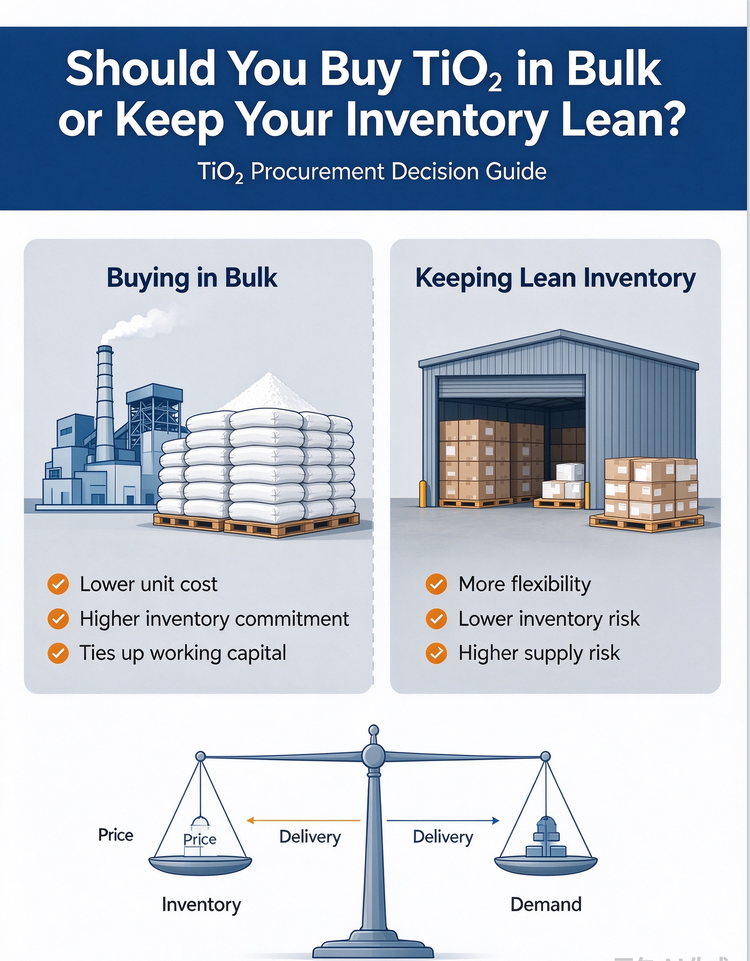
1. Buying in Bulk: Lower Unit Cost, Higher Inventory Commitment
Larger orders may help you negotiate better prices, reduce freight costs per ton, and secure supply for upcoming production.
However, bulk purchasing also ties up working capital, requires sufficient warehouse space, and increases your exposure if market prices fall or actual demand turns out lower than expected.
2. Keeping Lean Inventory: More Flexibility, but More Supply Risk
Smaller, more frequent orders can preserve cash flow and give your purchasing team more flexibility.
But if your TiO₂ supplier has a long lead time, shipping schedules change, or demand suddenly increases, low inventory can put production at risk.
For manufacturers that rely on TiO₂ every day, a delayed shipment may cost more than the savings achieved by keeping inventory low.
3. How Should You Decide?
Before placing your next order, consider these three questions:
A.What is your actual consumption? Use recent production data rather than sales forecasts alone.
B. How long does replenishment really take? Include supplier preparation, shipping, customs clearance, and inland delivery.
C. What is the cost of a stockout? Consider production interruptions, urgent freight, and the risk of missing customer delivery deadlines.
4. A More Practical Strategy: Buy According to Demand, Not Just Price
For stable, high-volume production, planned bulk purchasing may make sense when the price, delivery schedule, and storage capacity are favorable.
For uncertain demand or volatile purchasing conditions, consider splitting your purchases into batches instead of committing all your budget at once.
You can also establish a reorder point based on average consumption, replenishment lead time, and a reasonable safety-stock buffer.
The goal is not to hold the least inventory possible. It is to maintain enough inventory to protect production without tying up more cash than necessary.
From a supplier’s perspective, good purchasing decisions start with understanding the buyer’s real needs. The right TiO₂ supply plan should balance price, quality consistency, delivery reliability, and inventory flexibility.
How does your company manage TiO₂ inventory?
Do you prefer bulk purchasing to secure a better price, or smaller orders to maintain flexibility? I’d be interested to hear how other procurement professionals approach this decision.
#TitaniumDioxide #TiO2 #Procurement #InventoryManagement #SupplyChain #PaintIndustry #Coatings #Plastics #PrintingInk #RawMaterials #ChemicalIndustry
Post time: Oct-19-2026